Making Sense of a Parenting Plan or Custody Schedule
Parenting plans use a lot of unfamiliar terms for something that's actually just about your family's week. A plain-language guide to what these documents usually cover.

A quick note before anything else: this article explains common terms and ideas in plain language. It isn't legal advice, and it isn't a substitute for talking to a lawyer, mediator, or your local family court service if you're working through an actual agreement. What follows is simply a starting point, so the unfamiliar words feel a little less overwhelming.
Why it can feel confusing at first
A parenting plan is really just an agreement about how two households are going to raise the same kids. That's the whole idea underneath it. But the language used to describe it can make something quite human feel oddly clinical, full of terms like "custodial parent," "contact schedule," or "residential arrangement" that most people have never had a reason to learn before now.
If it feels confusing, that's not a reflection on you. It's genuinely unfamiliar territory, and most people are learning it for the first time under a lot of pressure.
What these documents usually cover
Plans vary a lot depending on where you live and your family's specific situation, but most cover some version of the following:
**Living arrangements** — where the children live day to day, and how time is split between households. This might be described as a schedule (which days, which weeks) rather than in percentages, though you'll sometimes see both.
**Handovers** — the practical details of moving between households: time, place, who's responsible for transport.
**Holidays and special occasions** — how school holidays, birthdays, and important days are shared or alternated, often set up separately from the regular week-to-week pattern.
**Decision-making** — how bigger decisions get made, such as schooling, medical care, or travel. Some plans split this evenly, others assign certain decisions to one parent.
**Communication** — how the parents will keep each other informed about day-to-day things, and sometimes what channel they'll use to do it.
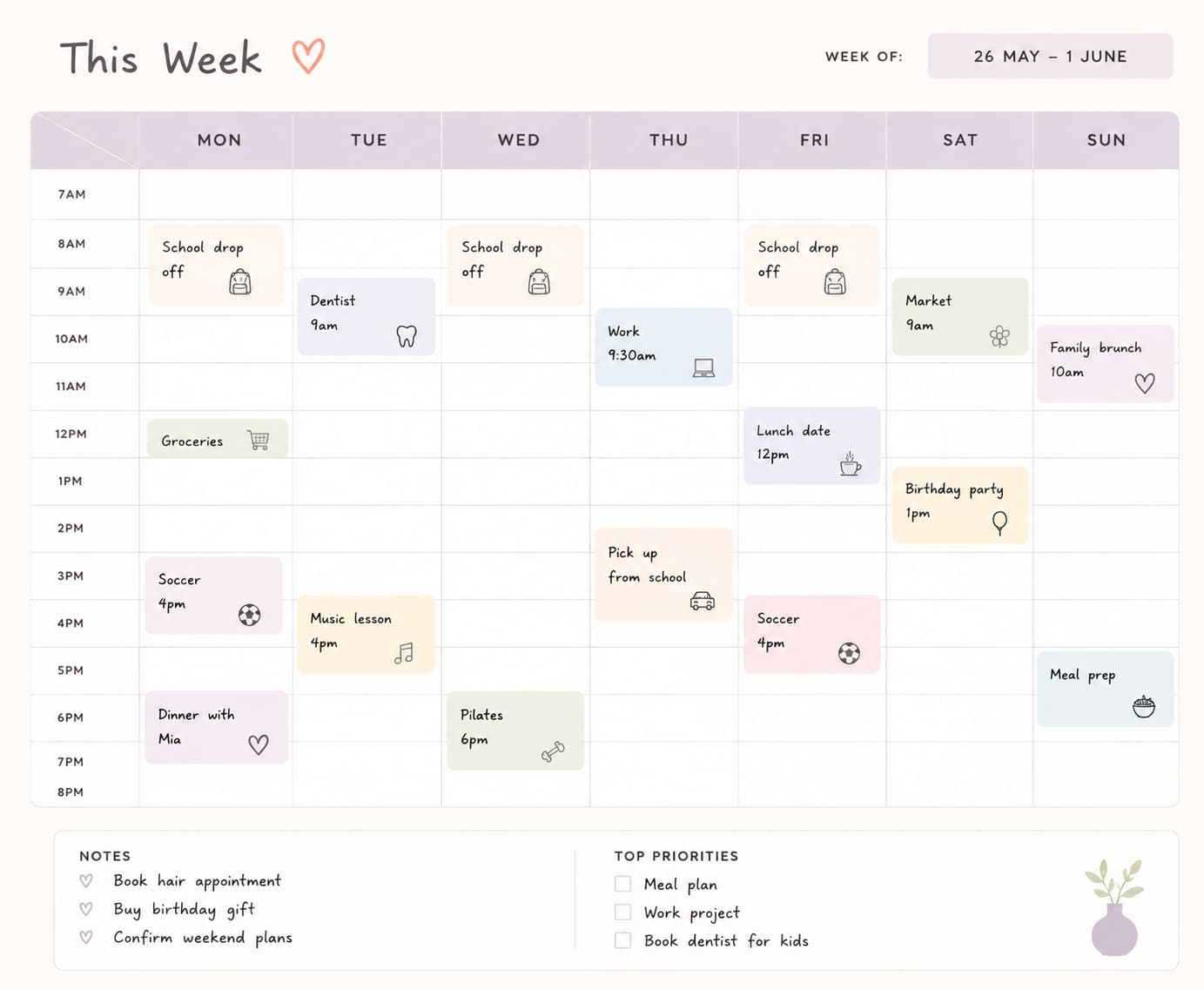
It's allowed to change
One thing that surprises a lot of people: a parenting plan isn't necessarily permanent. Kids grow, circumstances shift, and plans often get revisited over time, sometimes informally between parents, sometimes through a more formal process if it needs to be.
Knowing this upfront can take some of the pressure off getting everything exactly right the first time. It's a working document for a family that's going to keep changing, not a single decision you have to get perfect.
A few things worth having handy
Whether you're heading into a first conversation about a plan, or already living with one, having a few things organised tends to make the process smoother:
- A copy of the current plan or agreement, if one exists
- A record of what's actually been happening in practice, especially if it differs from what's on paper
- Any relevant dates coming up, such as school terms or upcoming holidays
None of this needs to be complicated. It's simply easier to have a clear conversation, with a lawyer, a mediator, or the other parent, when you're not trying to remember details on the spot.
If you're not sure where to start
If a plan doesn't exist yet, or the current one isn't working, a mediator or family lawyer is usually the right starting point, not because something has gone wrong, but because they can walk you through the actual process for your situation and location, which varies more than most people expect.
This article can't tell you what your plan should look like. What it can do is make the terminology a little less intimidating, so that conversation, whenever you have it, starts from a slightly calmer place.
Found this useful? Share it.
Comments
Related articles

Things Worth Thinking About Before You Write a Parenting Plan
The real conversations most parenting plans skip, from the everyday friction to structured provisions for when cooperation genuinely isn't possible.
Read article →
Write It Down, Then Put It Down
Writing something down doesn't have to mean building an argument against someone. A few simple habits keep your records useful, calm, and genuinely yours.
Read article →
You Don't Know Today What You'll Need Tomorrow
Staying organised from day one is one of the few things fully within your control. Here's what that actually looks like, and why it matters regardless of which way things go.
Read article →